A guide to Italian bedding
Percale or Sateen? Choosing a Signoria Firenze Bedding Finish
A sheet can be crisp as a folded letter or smooth as a well-worn shirt. In Signoria Firenze bedding, the choice between percale and sateen begins with the weave, but ends somewhere more personal: in the temperature of the room, the habits of the sleeper, and the particular pleasure one takes in making a bed.
The terms percale and sateen are often presented as opposing camps in a quiet domestic debate. One is cool, crisp, and matte; the other smooth, softly lustrous, and inviting. Both are woven from cotton. Both can be made with care. Neither is, by itself, a verdict on quality. Their difference lies chiefly in how the threads cross, and that small structural distinction has a way of making itself felt every evening.
Signoria Firenze bedding includes cotton styles in both finishes, with details that range from a clean, linear surface to embroidery, lace, and decorative borders. Looking beyond the label can make a choice easier. Fiber, weave, finishing, construction, laundering, and personal preference all have a part to play. Thread count, though it tends to receive the most dramatic billing, is only one member of the cast.
First, what a weave actually does
Woven fabric is made by crossing two systems of yarn: the lengthwise threads, called the warp, and the crosswise threads, called the weft. Percale uses a straightforward one-over, one-under pattern. The threads meet with regularity, producing a balanced, closely woven cloth. Sateen uses a longer-float structure: a yarn passes over several threads before going under one. Those longer floats create more exposed yarn at the surface, which is why sateen tends to feel smoother and reflect light more readily.
The distinction is not a matter of cotton versus something else, or of natural versus synthetic. Percale and sateen describe construction, not fiber. A cotton percale sheet and a cotton sateen pillowcase may begin with similar raw material but feel quite unlike one another once woven and finished. Cotton variety and yarn quality matter, too. Long-staple cotton, for instance, has longer fibers that can be spun into smoother, more durable yarns. Yet the weave remains the first clue to how the fabric is likely to behave.
The crisp character of percale
Percale has the manner of a freshly opened window. Its surface is generally matte, its hand crisp, and its structure comparatively firm. It is often favored by people who like a clean, cool sensation against the skin, or who associate good bedding with the reassuring rustle of a neatly made hotel bed. The fabric does not usually announce itself with shine. Its appeal is more restrained: a steady, breathable surface that feels composed rather than plush.
Because its weave is balanced and its surface less glossy, percale can suit bedrooms where a quietly tailored look is desired. It works well with plain white bedding, narrow embroidered lines, or a palette of soft neutrals. It can also be a practical choice for warm sleepers and warmer seasons, although a room’s temperature, the bedding’s weight, and the sleeper’s own physiology all affect comfort. No weave can promise that a person who runs hot will sleep cool in every circumstance.
Percale may feel a little crisp at first, then soften with use and laundering. That transformation is part of its character. It is not necessarily a flaw if a new sheet feels more structured than expected; nor is it necessary to expect every percale to become identical after a few washes. Fiber quality, finishing, and care all influence the result. As with a good cotton shirt, the surface changes gradually, and the person who prefers softness from the first night may find the adjustment less appealing than the person who enjoys a more broken-in feel.
The smooth, gentle sheen of sateen
Sateen has a different temperament. Its longer floats give it a smoother face, with a subtle sheen that catches light without necessarily becoming glossy. It tends to drape more fluidly than percale and may feel softer or silkier at first touch. For someone who wants bedding to feel immediately supple, sateen can be a natural choice. It has a quiet, enveloping quality: less crisp collar, more favorite blouse.
The finish can also influence the room’s appearance. Sateen brings a gentle luminosity to a bed, particularly in white, ivory, or muted colors. It can make a simple arrangement feel a little more dressed, even without elaborate decoration. In a bedroom with polished wood, a traditional headboard, or layered textiles, that soft reflection can add depth. In a spare, modern room, it can serve as a subtle counterpoint to straight lines and matte surfaces.
Sateen is not automatically warmer in every use, but many people perceive it as warmer or more substantial than percale. Its smoother surface and drape may feel comforting in a cooler room or during colder months. If warmth is a concern, consider the entire sleep system: duvet filling, blankets, room temperature, and the number of layers. A weave is one part of the experience, not a thermostat.
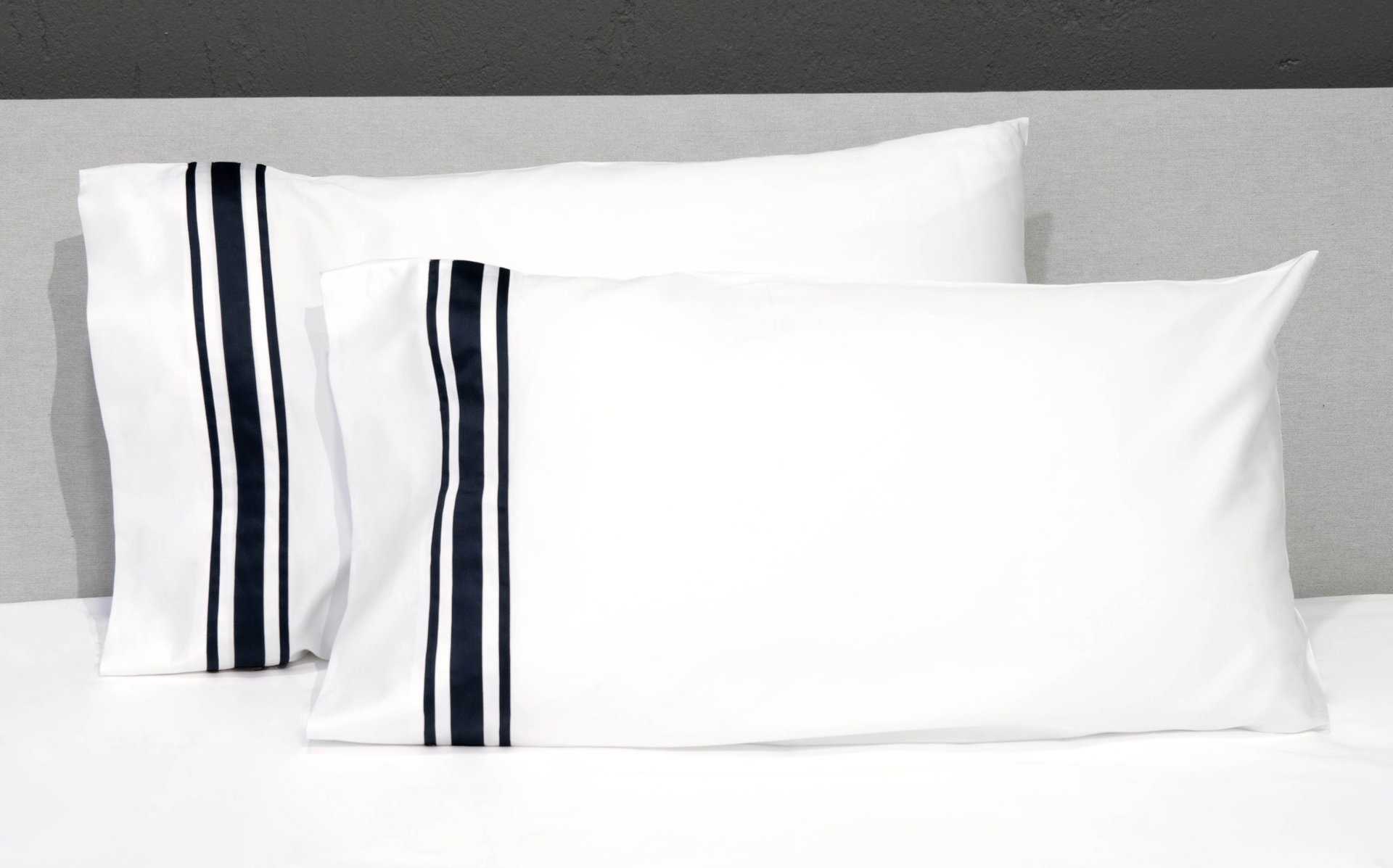
Signoria’s Tivoli Pillowcases offer a concrete example of the sateen option: they are made in Italy from 100% extra-long-staple cotton sateen, with a 300 thread count, and come as a set of two. Their color combinations and understated construction make them useful for considering how a smooth finish can contribute both comfort and a composed look. The Camilla Pillowcases take a more decorative route, pairing 300-thread-count long-staple cotton sateen with garment dyeing and lace edging. In one, the finish is part of a restrained design; in the other, it shares the stage with a visible detail.
Thread count: a number, not a personality
Thread count describes the number of threads in a square inch of fabric, but it cannot tell the whole story. The figure is affected by the yarn, the weaving method, and the way a manufacturer counts threads. A high number does not guarantee that a sheet will feel better, last longer, or suit a particular sleeper. Nor does a lower number, by itself, indicate a lesser fabric.
The useful question is not simply, “Which has the higher count?” but, “What kind of surface does this construction create, and does it match what I want?” A 300-thread-count sateen can feel smooth and inviting because of its weave and yarn. A 400-thread-count percale may feel crisp and structured for different reasons. Comparing the numbers without comparing the weave is a little like comparing two novels by the number of pages and expecting to know which one you will enjoy.
When choosing Signoria Firenze bedding, read the fabric description as a whole. Look for the fiber content, weave, thread count, and finishing details. A long-staple cotton fabric, a sateen surface, and a garment-dyed finish each contribute something different. The label is most informative when those details are taken together.
Comfort is a matter of habit
Sleep preferences are intimate and sometimes stubborn. Someone who has spent years choosing crisp shirts may gravitate toward percale. Someone who prefers a soft, fluid drape may prefer sateen. These are not scientific rules; they are useful starting points. The best fabric is the one that feels pleasant after the lights go out, not the one that wins an abstract argument about luxury.
- Consider your preferred first impression. If you like a fresh, crisp hand, percale is worth exploring. If you favor a smooth, soft surface from the outset, sateen may be more appealing.
- Think about the room and season. A warm bedroom and a person who dislikes heavy layers may point toward the airy feel often associated with percale. A cooler room or a taste for a more enveloping surface may make sateen attractive.
- Notice how you make the bed. Percale’s matte finish can lend itself to a crisp, tailored arrangement. Sateen’s soft sheen can bring a gentle polish to a layered bed.
- Account for the whole textile mix. Duvet covers, blankets, mattress protectors, and sleepwear affect the final sensation. A sheet does not work alone.
- Check the care instructions. The right routine helps preserve feel and appearance, regardless of weave.
The visual question: matte or luminous?
Bedding is used, of course, but it is also seen. A bed occupies a substantial portion of a bedroom and can determine whether the room reads as crisp, romantic, spare, or richly layered. Percale generally gives color a quieter, more matte expression. It can make white look clean and architectural, while colored percale may appear soft and understated. Sateen tends to add a little surface light, giving pale colors more depth and darker shades a gentle richness.
Neither look belongs to only one kind of interior. Percale can be elegant in a traditional room, and sateen can be perfectly at home in a minimalist one. The distinction is more like a difference in punctuation than a rule of décor. A room filled with matte surfaces may welcome a touch of sheen; a room with many reflective finishes may benefit from percale’s restraint.
Details matter as well. A hemstitch, embroidered line, lace edge, or decorative border can alter the impression without changing the fundamental weave. Camilla’s lace edge, for example, gives its sateen pillowcases a romantic note, while the range of colors in Tivoli offers a way to coordinate the pillow surface with a broader palette. The finish establishes the ground; the finishing details decide what is written upon it.
Care that respects the fabric
Care is not glamorous, but it is the part of bedding ownership that takes place most often. Follow the manufacturer’s instructions on the product tag, since dyeing, embroidery, and other finishes can call for particular handling. For the Tivoli Pillowcases, the stated guidance is to machine wash in lukewarm water on a delicate cycle, use mild detergent, rinse cold, and tumble dry on low. Ironing on medium heat is optional. Camilla’s care guidance likewise recommends a delicate lukewarm wash and low tumble drying, with medium ironing if desired.
A few broad habits help preserve cotton bedding: avoid unnecessary high heat, use detergent suited to the fabric, and do not overload the washing machine. High heat can encourage shrinkage or stress fibers over time; overly crowded loads can leave sheets less thoroughly rinsed. When laundering decorative pieces, pay attention to embellishments and closures, and consider separating them from rougher items that might snag the surface.
Percale and sateen may respond differently to washing, but neither requires theatrical treatment. The aim is to keep the fabric clean while respecting its construction. If a particular item carries special instructions, those should take precedence over general advice. A bedding label is a small document with more practical authority than most online rules of thumb.
A simple way to decide
Imagine the first moment of getting into bed. Do you want the sheets to feel cool and freshly pressed, with a little structure beneath the hand? Begin with percale. Do you want a smoother surface, soft drape, and a faint glow in the lamplight? Begin with sateen. If you are still undecided, think about the fabrics you reach for elsewhere: crisp cotton shirts, brushed flannel, polished silk. Those preferences do not dictate the answer, but they can reveal the sort of texture that feels like home.
Then look carefully at the actual product. Confirm the fiber content and weave rather than relying on a collection name or a photograph. Consider whether a decorative finish is central to your taste or merely a pleasant extra. Make room for care requirements and for the fact that cotton can soften with use. If possible, compare fabrics in person; touch remains the most direct test, and descriptions, however carefully written, cannot reproduce it.
The pleasure is in the fit
The choice between percale and sateen is sometimes treated as a contest, as though one finish must defeat the other. It need not be. A household may prefer percale on a warm-weather bed and sateen in a cooler room, or choose one finish for its feel and another for its appearance. Different pillowcases can even be part of the same considered arrangement, provided the combination suits the sleeper and the design.
Signoria Firenze’s cotton bedding makes the contrast legible: percale offers the familiar virtues of a crisp, matte weave, while sateen brings smoothness and a gentle sheen. Within sateen, details such as the color range of Tivoli or the garment dye and lace of Camilla show how finishing can shape the mood further. The decision is not simply about a technical term on a label. It is about the texture that greets you at night, the light that settles over the bed, and the small, repeated ritual of making a room ready for rest.
Choose the finish that answers those questions most naturally. The right bedding does not need to make a speech. It only needs to feel right, night after night.